
WELCOME BONUS 300%
UP TO €2000 + 100
FREE SPINS
UP TO €2000 + 100
FREE SPINS
Home → Games
Casino games at Goldyukon
Submit documents no older than three months
To ensure eligibility for bonuses, players must provide identification documents that are no older than three months. This requirement helps to verify current details and prevent fraudulent activity. Failure to submit recent documents may result in the forfeiture of bonus funds. Players are advised to check the specific requirements for document validity with customer support.
The welcome bonus offers a 300% match up to €2,000, along with 100 free spins. This substantial offer aims to provide new players with a significant boost to their initial bankroll. However, meeting the bonus terms, including document submission, is crucial for accessing these benefits.
For example, if a player claims the full €2,000 welcome bonus, they would need to wager €80,000 to meet the 40x wagering requirement (2,000 € x 40 = 80,000 € Umsatz). This highlights the importance of understanding all terms and conditions, including the document submission deadline, to avoid any issues when withdrawing winnings.
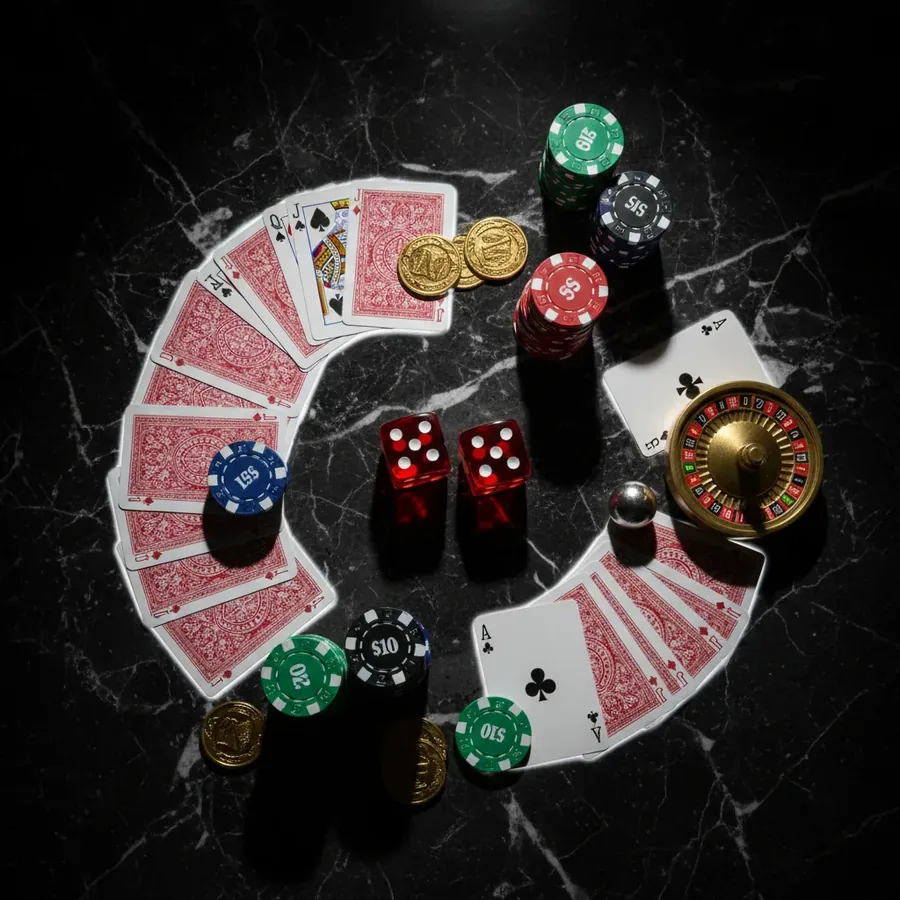
French Roulette: La Partage Lowers to 1.35 Percent
French Roulette, when utilizing the La Partage rule, significantly reduces the house edge on even-chance bets to a mere 1.35%. This rule specifically applies to bets like Red/Black, Odd/Even, and High/Low. The reduction in house edge offers a more favorable playing environment for the player compared to other roulette variations.
For instance, a bet of €100 on Red in French Roulette with La Partage would result in only €50 being returned if the ball lands on zero. This contrasts with American Roulette, where the house edge is 5.26% due to the double zero, making it less advantageous for players.
The RTP for French Roulette with La Partage on even chances is 98.65%, demonstrating the improved player returns. This makes it a strategically sound choice for players who frequently place outside bets, aiming to minimize losses over extended play sessions.
En Prison on Zero Gives Second Chance
The 'En Prison' rule in French Roulette provides a second chance on even-chance bets when the ball lands on zero. Instead of losing the bet outright, the stake is 'imprisoned' for the next spin. This rule effectively halves the house edge on these specific bets.
For example, a €50 bet placed on Black in French Roulette would be 'imprisoned' if zero appears. If the next spin is also zero, the bet is lost; however, if Black hits on the subsequent spin, the original €50 bet is returned, effectively negating the loss from the first zero.
This mechanic, like La Partage, brings the house edge down to 1.35% for even-chance bets, enhancing the player's potential to recoup losses. Internal bets in French Roulette, however, do not benefit from this rule, retaining a 2.70% house edge.
100 EUR bet, 50 rounds: the expected value
When placing a €100 bet over 50 rounds in a game with a 2.71% house edge, such as Jacks or Better 8/5 Video Poker, the expected loss can be calculated. A 2.71% house edge means that, on average, 2.71% of all wagers are retained by the casino over the long term.
With a €100 bet per round for 50 rounds, the total wagered amount is €5,000 (€100 x 50). Applying the house edge, the expected loss would be €135.50 (€5,000 x 2.71%). This figure represents the theoretical average outcome for a player making these bets.
The RTP for Jacks or Better 8/5 is 97.29%, meaning players can expect to get 97.29% of their wagers back over an extended period. Therefore, the expected value for the player in this scenario is a loss of €135.50, demonstrating the impact of the house edge on potential returns.
Splitting in Blackjack: one hand becomes two
In Blackjack, the 'Split' option allows a player to turn one hand into two by placing an additional bet equal to the original wager when their first two cards are of the same rank. This move is a strategic decision to improve the chances of winning against the dealer's upcard.
For instance, if a player is dealt two Aces, they can choose to split them, creating two separate hands, each starting with an Ace. The player then receives another card for each of these hands, allowing them to play them independently. Typically, Aces can only be split once, and may receive only one additional card.
Rules regarding splitting, such as 'Double After Split' (DAS), can improve the RTP by approximately 0.14 percentage points. Liberal Vegas Strip Blackjack, with rules like DAS and Resplit, offers a low house edge of 0.28%, making it a more advantageous variant for players employing basic strategy.
Game categories at a glance
| Category | Examples | Stakes From | Highlight |
|---|---|---|---|
| Slots | Nitropolis 4, Sun of Fortune, Extra Chilli Megaways | 0,10 EUR | thousands of titles |
| Table games | Roulette, Blackjack, Baccarat | 0,50 EUR | classic rules |
| Live casino | Quantum Roulette, Mega Roulette | 0,20 EUR | real dealers |
| Jackpot games | Mega Moolah, Divine Fortune, Age of the Gods | 0,20 EUR | progressive pools |
| Instant games | Aviator, Plinko, Mines | 0,10 EUR | fast rounds |
| Video poker | Jacks or Better, Deuces Wild | 0,25 EUR | strategy based |
Columns and Dozens Pay 2:1 in Roulette
In European Roulette, bets on Columns and Dozens offer a payout of 2:1. This payout structure is standard for these bet types on a wheel with a single zero sector. The house edge for these bets remains consistent with the overall European Roulette RTP of 97.30%.
Compared to inside bets like a Straight bet paying 35:1, the Columns and Dozens offer a lower potential return on investment. However, they cover a larger portion of the wheel, potentially leading to more frequent, smaller wins. The house advantage on these bets is 2.70%.
Players should be aware that the payout ratio of 2:1 for Columns and Dozens is fixed. This means that while covering more numbers, the individual win amount is less substantial than single-number bets. The RTP of 97.30% applies across all standard European Roulette bets, excluding special rules like La Partage.
Keno and Bingo with RTP Between 92 and 95
Certain Keno and Bingo games present Return to Player (RTP) percentages ranging from 92% to 95%. This indicates a house edge of 5% to 8% for these particular offerings. These figures represent a theoretical long-term average, not a guarantee of short-term results.
Within the provided data, Sic Bo Special Bets show a broad RTP spectrum from 81.48% to 92.13%, with the lowest single number bet at 7.87% house edge. This highlights significant variation in game mechanics and payout structures within these categories.
Players engaging with games falling within this RTP range should factor in the higher house advantage. For instance, a game with an 8.52% house edge means that, on average, 8.52% of all wagers are retained by the casino over an extended period.
When to Surrender 16 vs 10?
Late Surrender in Blackjack allows a player to forfeit half their stake after the dealer checks for blackjack. This rule offers a significant RTP improvement of approximately 0.08 percentage points. It is a strategic option available in specific situations.
The provided data does not directly address the specific scenario of surrendering a 16 against a dealer's 10. However, Blackjack Insurance, a side bet when the dealer shows an Ace, has a high house advantage of 7.47% and is advised against by basic strategy, except in card counting scenarios.
While the data does not detail the 16 vs 10 scenario, it does mention that Late Surrender improves RTP. Early Surrender, a much rarer rule, provides a more substantial RTP boost of up to 0.6 percentage points. Players should consult optimal strategy charts for specific hand decisions.
Punto Banco: 5 Percent Commission on Banker Wins
The Baccarat Tie bet, with a payout of 8:1, presents a substantial house advantage of 14.36%. This makes it the least favourable main bet within Baccarat, as indicated by its low RTP of 85.64%.
While the provided data does not explicitly state the commission for Banker wins in Punto Banco, it does detail the unfavourable Tie bet. The Tie bet is a side bet with a significantly higher house edge compared to other main bets in the game. Its standard deviation is noted at 2.64.
Players opting for the Baccarat Tie bet should understand its inherent disadvantage. The RTP of 85.64% means that, on average, 14.36% of all bets placed on this outcome will be retained by the casino over the long term.
Corner Pays 8:1, Dozen Only 2:1
In European Roulette, a Corner bet, covering four numbers, pays 8:1. This bet type is one of the inside wagers available on the wheel. The RTP for European Roulette, including this bet, is 97.30%.
In contrast, bets on Columns or Dozens, which cover twelve numbers each, offer a payout of 2:1. This significantly lower payout ratio reflects the larger number of outcomes covered by these bets. The house edge remains 2.70% for all standard bets.
The difference in payout between an 8:1 Corner bet and a 2:1 Dozen bet highlights the risk-reward trade-off in roulette. While a Corner bet has higher potential returns per unit wagered, it has fewer winning numbers compared to a Dozen bet.
Bankroll for 200 Rounds at 1 EUR
A bankroll of 200 EUR is required to sustain 200 rounds of play at 1 EUR per round. This is a standard calculation for assessing the minimum capital needed for a defined play session. The house edge for European Roulette stands at 2.70%, meaning a small portion of each wager is expected to be retained by the casino over time. Players engaging with this game should anticipate this statistical reality in their session planning.
To maintain a bankroll of 200 EUR for 200 rounds at 1 EUR per spin, the player must consider the RTP, or Return to Player. For European Roulette, the RTP is 97.30%, indicating that theoretically, 97.30 EUR of every 100 EUR wagered is returned to players over the long term. This figure is crucial for understanding the statistical probabilities of winning or losing over extended play.
The implication for a player aiming to play 200 rounds at 1 EUR per round with a 200 EUR bankroll is that they are operating with a buffer that accounts for the inherent house advantage. While the RTP is 97.30%, the 2.70% house edge means that over many rounds, a portion of the initial bankroll is statistically likely to be lost. This highlights the importance of managing stakes relative to the bankroll.
9/6 table: nine for Full House, six for Flush
The '9/6' designation in Video Poker Jacks or Better refers to the payout ratios for specific hands. A Full House pays 9 coins for every 1 coin wagered, while a Flush pays 6 coins. This specific paytable offers a Return to Player (RTP) of 99.54% when played with optimal strategy and the maximum bet. The house advantage for this variant is thus 0.46%.
The '9/6' structure is considered 'Full Pay' for Jacks or Better, as it provides a significantly higher RTP compared to other variations. For instance, a '8/5' paytable, where a Full House pays 8 and a Flush pays 5, results in a lower RTP of 97.29%. This difference of 2.25 percentage points in RTP is substantial over extended play.
To achieve the stated RTP of 99.54% on the '9/6' Video Poker Jacks or Better table, a maximum bet of 5 coins per hand is mandatory. This is particularly important for the Royal Flush payout, which is 4000 coins when the maximum bet is placed, compared to 800 coins otherwise. Deviating from the maximum bet or optimal strategy will reduce the RTP below 99.54%.
Straight, Split, and Corner: Three Terms Briefly Explained
A Straight bet in Roulette involves wagering on a single number. The payout for a successful Straight bet on European Roulette is 35 to 1. This bet type has the same RTP of 97.30% as all other bets on a European Roulette wheel, due to the consistent house edge across all wagers on this type of wheel. The house advantage remains 2.70%.
A Split bet in Roulette covers two adjacent numbers on the betting layout. The payout for a successful Split bet is 17 to 1. Like the Straight bet, its RTP is 97.30% on European Roulette, as the casino's advantage is built into the payout structure relative to the number of possible outcomes. The house edge is 2.70%.
A Corner bet, also known as a Square bet, covers four numbers that meet at a corner on the betting layout. The payout for a successful Corner bet is 8 to 1. This bet also operates with the same 97.30% RTP as other wagers on European Roulette, maintaining the consistent 2.70% house advantage. The number of sectors on the wheel is 37.
Straight, Split, and Corner in direct comparison
Comparing Straight, Split, and Corner bets on European Roulette reveals identical RTPs of 97.30%. While a Straight bet covers one number and pays 35:1, a Split bet covers two numbers for 17:1, and a Corner bet covers four numbers for 8:1. The underlying house advantage of 2.70% applies equally to all these bet types on the 37-sector wheel.
The payout multipliers differ significantly: 35:1 for a Straight, 17:1 for a Split, and 8:1 for a Corner. Despite these variations, the expected return over the long run remains consistent. For example, a 1 EUR Straight bet winning yields 35 EUR profit plus the original stake, whereas a 1 EUR Corner bet winning yields 8 EUR profit plus stake.
The fundamental reason for the equal RTP across Straight, Split, and Corner bets on European Roulette lies in the payout structure relative to the number of outcomes. Each bet type is calculated such that the casino's 2.70% edge is maintained, regardless of how many numbers are covered. This ensures a predictable house advantage of 2.70% on all these internal wagers.
Split, Double, and Surrender: Three Decisions Explained
Splitting Aces in Blackjack, when allowed, can improve the RTP. If a player is dealt two Aces, they can split them into two separate hands, effectively doubling their bet. Some rules allow for a single card to be drawn to each split Ace, which can offer a slight advantage. The specific rules surrounding splits can modify the house edge by approximately 0.08 percentage points.
Doubling down in Blackjack is a strategic decision where a player doubles their initial bet after receiving their first two cards. The player then receives only one more card. Allowing doubling on any two cards (DAS) can improve the RTP by around 0.14 percentage points compared to limitations. This strategy is essential for optimal play in many Blackjack variants.
Late Surrender in Blackjack allows a player to forfeit half their bet after the dealer checks for Blackjack. This rule modification can reduce the house edge by approximately 0.08 percentage points. While not as impactful as Early Surrender (which is much rarer), Late Surrender provides players with an option to mitigate losses in unfavourable situations, particularly against a dealer's Ace or 10-value card.
Contact
Live - online chat
Banking




Providers







Yukon Gold Casino 2026